61st Constitutional Amendment Act 1988, Provisions, Significance

61st Constitutional Amendment Act

The 61st Constitutional Amendment Act, 1988, is a landmark reform in India’s democratic framework that lowered the voting age from 21 years to 18 years. This amendment, enacted during the tenure of Prime Minister Rajiv Gandhi, expanded political participation among India’s youth, empowering millions of young citizens with the right to vote. It symbolized India’s commitment to deepening democracy by ensuring inclusivity and encouraging political awareness among younger generations.

61st Constitutional Amendment Act, 1988

The 61st Constitutional Amendment Act was passed by Parliament on March 28, 1989, and came into effect on March 28, 1989. It amended Article 326 of the Indian Constitution, which governs elections to the House of the People (Lok Sabha) and State Legislative Assemblies based on adult suffrage. Before this amendment, the minimum voting age was 21 years. The Act reduced this to 18 years, acknowledging the evolving maturity, awareness, and participation of India’s youth in the nation’s socio-political discourse.

This reform was rooted in the idea that youth form a vital segment of the population capable of shaping national policies and democratic institutions. With this change, a large number of new voters were added to India’s electoral rolls during the 1989 General Elections, marking a turning point in the political landscape.

61st Constitutional Amendment Act Historical Background

India’s democratic evolution since independence has been marked by expanding rights and inclusivity. When the Constitution came into effect in 1950, the voting age was fixed at 21 years, reflecting post-independence caution regarding administrative readiness and citizens’ literacy levels.

However, by the 1980s, India had undergone significant socio-economic transformation. The literacy rate improved, communication networks expanded, and political awareness deepened through mass media. Youth-led movements like the JP Movement (1974) and student activism during the Emergency (1975-77) demonstrated that the young population was both politically conscious and socially engaged.

Recognizing this, Prime Minister Rajiv Gandhi and the Congress government sought to harness this energy through democratic inclusion. The Statement of Objects and Reasons attached to the Amendment Bill highlighted that lowering the voting age would “provide an opportunity to the unrepresented youth of the country to express their feelings and help in shaping the destiny of the nation.”

61st Constitutional Amendment Act Provisions

The 61st Amendment Act is concise, containing only one operative clause:

  • Amendment to Article 326: The phrase “twenty-one years” was substituted with “eighteen years” in Article 326. This change applied to both parliamentary and state assembly elections, ensuring uniformity in the voting age across all levels of government.
  • Key Aspects:
    • The amendment does not affect eligibility to contest elections, which continues to be governed by Articles 84 and 173.
    • It aligns with global democratic standards, as many democracies, including the United States (1971) and the United Kingdom (1969), had already reduced their voting age to 18 years.
    • It reflects a progressive expansion of democratic rights, similar to the 42nd and 44th Amendments, which focused on the rights and duties of citizens.

61st Constitutional Amendment Act Significance

The 61st Amendment holds immense constitutional, social, and political importance. It marked a generational shift in Indian democracy, making it more participatory and reflective of the nation’s demographic composition. Major Significances:

  1. Democratic Deepening: Strengthened India’s democratic base by expanding the electorate to include younger citizens.
  2. Youth Empowerment: Recognized youth as an active force in shaping governance and policy.
  3. Political Awareness: Promoted civic education and engagement among the young population.
  4. Global Alignment: Brought India in line with democratic norms worldwide regarding voting age.
  5. Increased Representation: Added millions of new voters, influencing electoral outcomes and political strategies.

61st Constitutional Amendment Act Impact

The 61st Amendment altered India’s democratic framework by broadening the definition of “adult suffrage.” Article 326, under Part XV (Elections), ensures that elections to the Lok Sabha and State Assemblies are based on adult suffrage. By redefining adulthood from 21 to 18 years, the Act:

Legal and Constitutional Impact:

  1. Expanded the electoral base by nearly 20%.
  2. Reinforced the principle of equality under Article 14, ensuring equal participation rights.
  3. Strengthened the fundamental right to participate in public affairs, indirectly upholding the spirit of democracy enshrined in the Preamble and Article 19.

Political and Social Impact:

  1. Increased Youth Representation: Political parties began incorporating youth-centric policies and manifestos, recognizing young voters as a significant constituency.
  2. Rise of Student Politics: University-level political activities gained greater legitimacy, feeding into national politics through parties like the NSUI, ABVP, and SFI.
  3. Policy Reorientation: Post-1989, governments introduced several youth-oriented programs, such as the Nehru Yuva Kendra Sangathan (NYKS), Skill India Mission, and National Youth Policy (2014), promoting youth empowerment.
  4. Electoral Participation: Data from the Election Commission (2019) show that youth voter turnout has steadily increased, with nearly 55-60% participation among first-time voters in recent elections.

61st Constitutional Amendment Act Global Perspective

Globally, the movement to lower the voting age was driven by similar democratic ideals. India’s reform followed a global democratic trend, highlighting its alignment with international standards of youth inclusion in governance.

61st Constitutional Amendment Act Global Perspective
Country Year of Lowering Voting Age Previous Age New Age

United Kingdom

1969

21

18

United States

1971 (26th Amendment)

21

18

France

1974

21

18

India

1988

21

18

Japan

2015

20

18

61st Constitutional Amendment Act Challenges

While the amendment was widely welcomed, certain concerns and challenges have persisted:

  1. Political Manipulation: Critics argue that political parties often exploit young voters with populist promises.
  2. Lack of Civic Education: Many first-time voters lack awareness about democratic processes and their responsibilities.
  3. Urban-Rural Divide: Limited voter education in rural areas can hinder informed participation.
  4. Low Turnout: Despite inclusion, young voter turnout remains inconsistent, as per ECI reports.
  5. Digital Misinformation: The rise of social media has exposed young voters to fake news and ideological polarization.

Way Forward:

  1. Civic Education in Schools: Incorporate electoral literacy in the national curriculum under the National Education Policy (NEP 2020).
  2. Youth Voter Awareness Programs: Expand ECI’s Systematic Voters’ Education and Electoral Participation (SVEEP) initiative to enhance informed participation.
  3. Political Accountability: Encourage issue-based campaigns rather than personality-driven politics.
  4. Digital Literacy: Combat misinformation through official awareness campaigns and collaborations with tech platforms.
  5. Engaging Youth in Governance: Promote youth representation in local bodies and advisory councils to sustain democratic engagement.

61st Constitutional Amendment Act UPSC

The 61st Constitutional Amendment Act, 1988, remains one of the most transformative milestones in India’s democratic journey. By lowering the voting age from 21 to 18, it not only empowered youth but also redefined India’s political dynamics. The reform broadened participation, deepened representation, and aligned India with global democratic norms. Even decades later, it continues to shape the spirit of inclusive governance and citizen empowerment envisioned by the Constitution.

  • According to the Election Commission of India (ECI), the number of registered voters increased from 36.5 crore in 1984 to 49.8 crore in 1989, a rise primarily due to the inclusion of youth aged 18-21.
  • As per the Census of India 1991, nearly 35% of India’s population fell within the age group of 15-34 years, underscoring the demographic potential tapped by the amendment.
  • The 1989 General Elections witnessed one of the highest levels of first-time youth participation in Indian electoral history.
  • The ECI’s “India Votes” report (2020) highlights that voters aged 18-25 today constitute nearly 15% of the total electorate, making them a decisive group in elections.
  • In 2024, the Election Commission of India launched a digital voter registration system, simplifying the process for first-time voters aged 18-21.
  • According to NITI Aayog (2023), India’s median age is 28.4 years, reinforcing the demographic importance of young voters.
  • The Lok Sabha Elections 2024 recorded over 1.85 crore first-time voters, reflecting the continued success of the amendment’s intent.

61st Constitutional Amendment Act FAQs

Q1: What is the 61st Constitutional Amendment Act, 1988?

Ans: It reduced the minimum voting age in India from 21 to 18 years by amending Article 326 of the Constitution.

Q2: When was the 61st Amendment implemented?

Ans: The amendment came into effect on March 28, 1989.

Q3: Who introduced the 61st Constitutional Amendment Bill?

Ans: The amendment was introduced by the Rajiv Gandhi-led government.

Q4: How did the 61st Amendment affect voter participation?

Ans: It added a large number of new voters during the 1989 General Elections, significantly expanding electoral participation.

Q5: Why was the voting age reduced to 18 years?

Ans: It was reduced to recognize the maturity, awareness, and democratic rights of India’s young citizens.
Monetary Policy in India, Types, Objectives, Significance

Monetary Policy in India

Monetary Policy in India frames an important outline of the Indian economy as it helps the RBI as well as the government in controlling the supply of money, inflation and the stability of the Indian economy. In this article, we are going to cover all about the Monetary Policy in India, its types, important monetary tools and related concepts. 

Monetary Policy in India

Monetary Policy is a macroeconomic policy tool used by the Central Bank to manage the money supply in the Indian economy in order to achieve the macroeconomic goals of the country. The central bank uses various monetary instruments to manage the credit availability in the market to fulfil all the objectives of the economic policy. 

The Reserve Bank of India Act 1934 makes it necessary for the Reserve Bank of India to create monetary policies of India. Before 2016, the governor of RBI was responsible for formulating Monetary Policy in India and after 2016, the Finance Act of India 2016 was enacted that led to the creation of the Monetary Policy Committee. This committee is responsible for formulating the monetary policy of India. 

Monetary Policy Objectives 

The Monetary Policy of India has the following objectives: 

  • Maintaining price balance
  • Provide employment opportunities 
  • Managing the exchange rates 
  • Accelerating the growth of economy

Monetary Policy Types 

There are two types of Monetary Policy- Expansionary Monetary Policy and Contractionary Monetary Policy

Expansionary Monetary Policy

Also known as Accommodative Monetary Policy, its primary objective is to increase the money supply in the economy to stimulate growth. The key measures include:

  • Decreasing interest rates – Makes borrowing cheaper for consumers and businesses, encouraging spending and investment.
  • Lowering reserve requirements for banks – Allows commercial banks to lend more, increasing liquidity in the market.
  • Purchasing government securities – The RBI injects money into the economy by buying securities, thereby increasing available funds.

This policy is aimed at boosting economic activity, encouraging consumer spending, and reducing unemployment. However, if overused, it can lead to inflationary pressures or even hyperinflation.

Contractionary Monetary Policy

This policy is designed to reduce the money supply in the economy, primarily to control inflation. The key measures include:

  • Raising interest rates – Makes borrowing costlier, discouraging excessive spending and investment.
  • Increasing reserve requirements for banks – Limits the amount banks can lend, tightening liquidity in the market.
  • Selling government bonds – Withdraws money from the economy as buyers pay the RBI for these securities.

The primary goal is to control rising prices and maintain economic stability.

Monetary Policy Committee (MPC)

Features of Indian Monetary Policy Committee include:

  • The setting of MPC  was recommended by the Urjit Patel Committee. 
  • Section 45ZB of amended RBI Act 1934, provides for the establishment of 6-member monetary policy committee. 
  • MPC has to meet at least 4 times a year. 
  • The committee consists of 6 members. 
  • The MPC members can hold the office for a term of 4 years and are not eligible for re-appointment. 
  • The RBI Governor has a casting vote in the case of a tie. 

Monetary Policy Tools in India 

Various instruments used by the RBI to control the money supply can be categorized into two categories:

  • Quantitative Tools – Quantitative tools of monetary policy are aimed at controlling the cost and quantity of credit.
  • Qualitative Tools – Qualitative tools of monetary policy are aimed at controlling the use and direction of credit.
    • The qualitative measures do not regulate the total amount of credit created by commercial banks. Rather, they make a distinction between good credit and bad credit and regulate only such credit which creates economic instability. Therefore, qualitative measures are known as the selective measures of credit control.

Monetary Policy Quantitative Tools

Major instruments coming in this category are explained below:

  1. Bank Rate (Discount Rate) 

  • Bank Rate is the rate at which the RBI buys or rediscounts Bills of Exchange or Commercial Papers from Scheduled Commercial Banks. 
  • Higher Bank Rate means banks avoid borrowing money from RBI and the money supply decreases. 
  • Lower Bank Rate means banks borrow more money and the money supply increases. 
  1. Reserve Requirements

A regulation that specifies the minimum reserves banks must maintain.
Two components:

a) Cash Reserve Ratio (CRR)

  • Percentage of a bank’s total Demand and Time Liabilities (DTL) deposited with RBI in cash.
  • No interest is paid on CRR deposits.

  • When CRR increases, there is less money available for lending and money supply decreases. 
  • When the CRR decreases, money money is available for lending and the money supply in the economy increases. 

b) Statutory Liquidity Ratio (SLR)

  • Percentage of Net Demand and Time Liabilities (NDTL) maintained by banks in cash, gold, SLR securities, or a combination.
  • It is not mandatory to deposit SLR to the RBI. 
  • Range prescribed by RBI: 0%–40%.
  • When SLR increases, banks have less lending capacity and money supply decreases. 
  • When SLR decreases, banks have more lending capacity and the money supply increases. 

3. Liquidity Adjustment Facility (LAF)

Helps banks manage daily liquidity mismatches via:

  1. a) Repo Rate – Interest rate at which RBI lends short-term funds to SCBs against approved securities.
  2. b) Reverse Repo Rate – Interest rate at which RBI borrows from SCBs (banks park excess funds with RBI).

4. Marginal Standing Facility (MSF)

  • Introduced in 2011 by the Narasimhan Committee recommendation.
  • Allows SCBs to borrow overnight loans (up to 1% of NDTL) from RBI at Repo Rate + 0.25%.
  • Marginal Standing Facility is used when funds via LAF are exhausted.
  • Minimum: ₹1 crore, in multiples thereof.

5. Open Market Operations (OMOs)

  • Buying/selling of government securities by RBI.
  • Buy securities in order toInject liquidity into the economy.
  • Sell securities in order to withdraw liquidity from the economy.

6. Market Stabilization Scheme (MSS)

  • RBI sells Market Stabilization Bonds (MSBs) to absorb excess liquidity.
  • Mainly used for sterilization of surplus funds in the system.

7. Term Repos

  • Introduced in Oct 2013 for tenors of 7, 14, or 28 days.
  • Provides liquidity for longer than overnight.
  • Helps develop the inter-bank money market and improve monetary policy transmission.

Monetary Policy Qualitative Tools

Major instruments coming in this category are explained below

  1. Margin Requirements

  • Margin Requirements is the difference between the value of securities offered as collateral and the actual value of the loan granted.
  • Introduced to control credit flow to specific sectors.
  • High margin leads to less loan sanctioned and reduced credit to that sector.

2. Consumer Credit Regulation

  • Consumer credit regulation means loans given by banks in installments for purchasing consumer durables.
  • RBI’s Control Measures:
    • Increase down payment required.
    • Reduce the number of repayment installments.
  • Used when excess demand for consumer goods pushes prices upward.

3. Moral Suasion

  • Moral Suasion means persuasion and requests by RBI to banks to follow monetary policy guidelines.
  • Relies on cooperation rather than compulsion to maintain desired money supply levels.

4. Direct Action

  • Direct Action means penal or restrictive measures against non-cooperative banks.
  • Examples include: 
    • Refusal to rediscount bills.
    • Charging penal interest rates.

5. Rationing of Credit (Credit Ceiling)

  • Rationing of credit means RBI sets a maximum limit on loans that Scheduled Commercial Banks (SCBs) can grant.
  • This tightens lending and controls credit expansion.

6. Priority Sector Lending

  • RBI mandates banks to allocate a specific portion of lending to sectors like:
    • Agriculture & allied activities
    • Micro & small enterprises
    • Housing for low-income groups
  • Ensures credit availability to socially important but underfunded sectors.

Monetary Policy Significance

Introduction of Monetary Policy on India has the following significance: 

  • Helps maintain price stability and economic growth of the country. 
  • Helps in managing inflation. 
  • Helps determine variables like consumption, savings, investment and capital formation. 
  • Control over the money supply market helps in balancing the currency exchange rates.

Monetary Policy in India FAQs

Q1: What is the Monetary Policy of India?

Ans: It is the process by which the Reserve Bank of India manages money supply and interest rates to achieve economic objectives like growth, inflation control, and financial stability.

Q2: What is Fiscal Policy?

Ans: It refers to the government's use of taxation, spending, and borrowing to influence the economy.

Q3: What is the meaning of Bank Rate?

Ans: It is the rate at which the RBI is willing to buy or rediscount bills of exchange from commercial banks.

Q4: What do you mean by Moral Suasion?

Ans: It is the RBI’s method of persuading banks to follow its monetary policy guidelines without using legal force.

Q5: What is Expansionary Monetary Policy?

Ans: It is a policy aimed at increasing money supply and stimulating economic growth, often by lowering interest rates and reserve requirements.

Oil Reserves in India, Formation, Distribution, Map, Govt Initiatives

Oil Reserves in India

Oil Reserves in India play a crucial role in ensuring the country’s energy security, economic stability, and industrial growth. Petroleum oil is the backbone of transportation, manufacturing, power generation, and defence sectors. Despite being one of the largest consumers of crude oil in the world, India has limited domestic oil reserves, making it heavily dependent on imports.

Oil Reserves in India

India has moderate proven oil reserves compared to global standards. These reserves are unevenly distributed and largely confined to specific geological regions. The country’s sedimentary basins cover nearly 3.36 million square kilometres, but only a portion has been explored so far.

Domestic crude oil production meets only 15-18% of India’s total demand, while the rest is fulfilled through imports from West Asia, Russia, and Africa. This makes the development of Oil Reserves in India a strategic priority.

Also Read: Coal Mines In India

Constituents of Petroleum and Mineral Oil

Petroleum, also known as mineral oil, is a complex mixture of hydrocarbons along with small amounts of other organic compounds. It is formed over millions of years from decomposed organic matter under high pressure and temperature in sedimentary rocks.

  • Hydrocarbons (90–95%) – Mainly compounds of hydrogen and carbon, forming alkanes, cycloalkanes, and aromatic hydrocarbons.
  • Organic compounds (5–10%) – Contain oxygen, nitrogen, sulphur, and other elements.
  • Trace organo-metallic compounds – Include metals like vanadium and nickel present in very small amounts.
  • Minor impurities – Influence refining processes and environmental emissions when combusted.

Formation of Petroleum and Mineral Oil

Petroleum or mineral oil is formed over millions of years through geological and biochemical processes in sedimentary rocks. Its formation requires specific conditions of organic matter accumulation, burial, pressure, and temperature.

  • Origin: Derived from the remains of microscopic plants and animals deposited in sediments millions of years ago.
  • Sedimentary Rock Requirement: Only occurs in porous and permeable sedimentary rocks capable of storing oil.
  • Porosity: Rocks must have tiny pores or gaps to accommodate sufficient quantities of oil.
  • Permeability: Pores must be interconnected to allow oil and gas to flow when wells are drilled.
  • Impervious Cap Rock: Porous rocks must be capped by impermeable layers to prevent oil from escaping.
    Accumulation in Traps: Oil generally accumulates in anticlines, fault traps, and other geological traps.
  • Favourable Geological Period: Most petroleum in India formed during the Tertiary period when conditions for organic deposition were ideal.
  • Transformation Process: Buried organic matter undergoes heat and pressure, converting it into hydrocarbons over millions of years.

Distribution of Petroleum and Mineral Oil in India

The Distribution of Petroleum and Mineral Oil in India is closely linked to sedimentary basins formed over millions of years. These basins contain organic matter that, under heat and pressure, transformed into hydrocarbons.

1. Assam (Brahmaputra Valley)

Assam is the oldest oil-producing region in India and holds a historic position in the country’s petroleum industry. Oil-bearing strata extend for nearly 320 km along the Brahmaputra Valley in Upper Assam. The oil occurs in Tertiary sedimentary rocks associated with anticlines and fault traps.

  • Oldest oil-producing state in India
  • Major oilfields: Digboi, Naharkatiya, Moran-Hugrijan
  • Digboi is the oldest oilfield in India
  • Oil is refined mainly at Digboi, Guwahati, Bongaigaon, and Barauni
  • Oilfields are relatively inaccessible and far from major consumption centres

2. Gujarat (Cambay Basin)

Gujarat is one of the most important on-shore oil-producing regions in western India. The oilfields are mainly located in the Cambay (Khambhat) Basin, which contains thick sedimentary deposits rich in hydrocarbons.

  • Major oilfields: Ankleshwar, Kalol, Mehsana, Nawgam, Kosamba, Kathana, Barkol, Sanand
  • Ankleshwar is the most productive oilfield of the state
  • Oil is transported to refineries at Trombay and Koyali
  • Well-developed pipeline network supports production and refining

3. Rajasthan (Barmer–Sanchor Basin)

Rajasthan has emerged as India’s largest on-shore oil-producing state due to major discoveries in the Barmer region. The basin contains significant reserves trapped in sandstone formations.

  • One of the largest inland oil discoveries in India
  • Major oilfields: Mangala, Saraswati, Rajeshwari
  • Contributes significantly to India’s domestic crude oil output
  • Modern extraction technology used for enhanced oil recovery

4. Mumbai High (Western Offshore Region)

Mumbai High is the largest and most productive oil-producing region in India. It is an off-shore oilfield located in the Arabian Sea, about 160 km west of Mumbai. Discovered in 1974, it lies in Miocene-age rock strata.

  • Largest contributor to India’s crude oil production
  • Located in the western off-shore basin
  • Supported by advanced offshore drilling platforms like Sagar Samrat
  • Includes nearby fields such as Bassein

5. Krishna–Godavari Basin (Eastern Offshore Region)

The Krishna–Godavari (KG) Basin along the eastern coast is an important emerging oil and gas-producing region. It holds substantial hydrocarbon potential in both on-shore and off-shore areas.

  • Located off the coast of Andhra Pradesh
  • Important off-shore oilfield: Rava
  • Significant reserves of both oil and natural gas
  • Considered one of India’s most promising future energy regions

6. Cauvery Basin (Tamil Nadu and Offshore Areas)

The Cauvery Basin is another important oil-producing region located in Tamil Nadu and adjoining offshore areas. The basin has both on-shore and off-shore oilfields.

  • Important oilfields: Narimanam, Kovilappal
  • Oil found in Tertiary sedimentary formations
  • Moderate but steady contribution to domestic production

Also Read: Silver Production in India

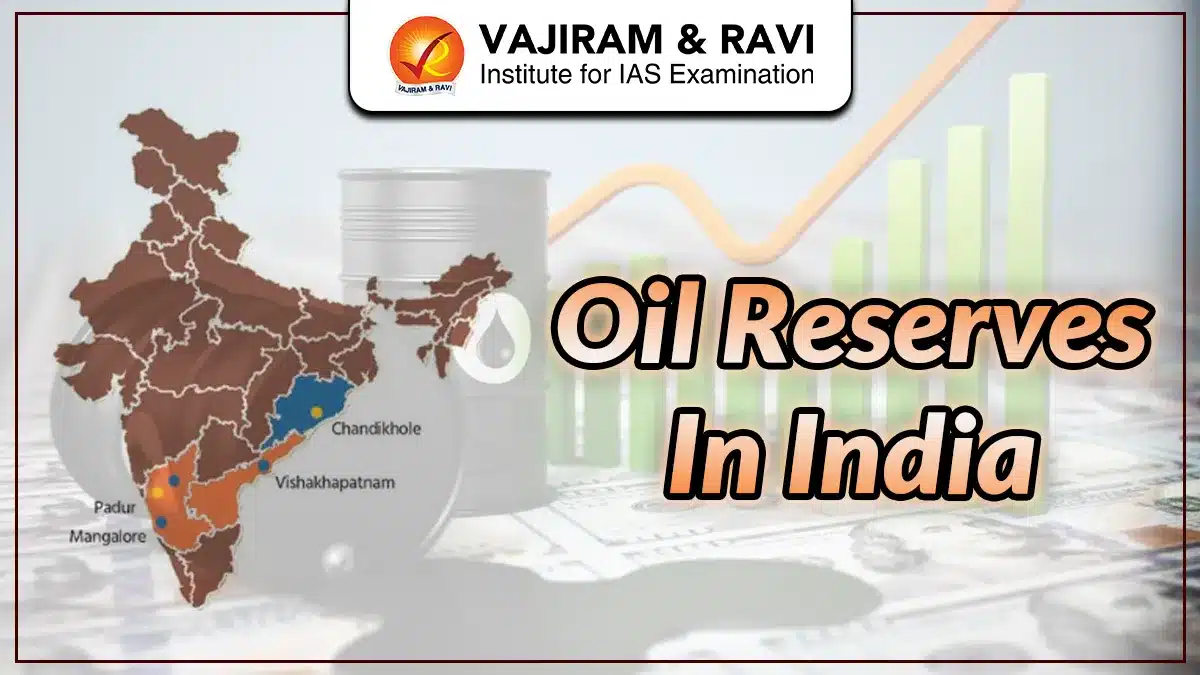
Oil Reserves in India Map

An Oil Reserves in India Map highlights the concentration of petroleum resources along the western coast and north-eastern region. Offshore areas dominate India’s oil production, while onshore reserves are relatively scattered.

India’s Oil Reserves vs Global Oil Reserves

India’s oil reserves are very limited compared to global oil-rich nations, even though India is among the top crude oil consumers worldwide. While India holds less than 1% of global proven oil reserves, countries in the Middle East and Russia dominate global reserves, making India highly dependent on imports.

India’s Oil Reserves vs Global Oil Reserves
India Global Oil Reserves

Less than 1% share of proven oil reserves

Over 50% reserves concentrated in the Middle East

Domestic production meets only a small part of demand

Many countries have surplus production

Heavy import dependence (over 80%)

Major exporters of crude oil

Oilfields mainly in Mumbai High, Assam, Gujarat, Rajasthan

Large reserves in Saudi Arabia, Venezuela, Russia, Iran

Low reserve-to-production ratio

High reserve-to-production ratio

Vulnerable to global price and supply shocks

Greater energy and strategic stability

Government Initiatives for Oil Exploration

Government Initiatives for Oil Exploration in India are aimed at boosting domestic crude oil production, reducing import dependence, and encouraging private and foreign investment. These reforms focus on policy simplification, flexible licensing, and faster monetisation of oil and gas resources.

  • Hydrocarbon Exploration and Licensing Policy (HELP): Introduced a single licence for all hydrocarbons, replaced profit-sharing with a revenue-sharing model, and provided pricing and marketing freedom to explorers.
  • Open Acreage Licensing Policy (OALP): Allows companies to choose exploration blocks of interest through continuous bidding rounds, promoting exploration of unexplored and frontier areas.
  • New Exploration Licensing Policy (NELP): Earlier framework that opened the sector to private and foreign players, later replaced due to regulatory rigidity and delays.
  • Discovered Small Field Policy (DSF): Aimed at monetising small and marginal oilfields quickly by encouraging participation of smaller operators.
  • National Data Repository (NDR): Provides easy access to geological and geophysical data, improving transparency and informed investment decisions.

Environmental Concerns Related to Oil Exploration

Environmental concerns related to oil exploration arise due to the intensive drilling, extraction, and transportation activities involved in the petroleum sector. These activities often take place in ecologically sensitive areas such as coastal regions, forests, wetlands, and offshore zones, posing serious risks to the environment.

  • Oil spills and leakages that contaminate marine and coastal ecosystems, affecting fisheries and coral reefs
  • Air pollution caused by gas flaring, drilling operations, and emissions of greenhouse gases
  • Water pollution due to contamination of surface and groundwater from drilling muds and chemical waste
  • Land degradation and deforestation during on-shore exploration and pipeline construction
  • Loss of biodiversity and disturbance to wildlife habitats, especially in sensitive regions
  • Climate change impacts due to increased carbon emissions from fossil fuel extraction and use

Also Read: Manganese Ore Distribution in India

Challenges in Enhancing Domestic Oil Production

  • Limited proven reserves: India holds less than 1% of global proven crude oil reserves, which restricts large-scale expansion of domestic output.
  • High import dependence: Domestic production meets only 15–18% of India’s crude oil demand, making the country heavily reliant on imports.
  • Declining production from mature fields: Major fields such as Mumbai High and Assam have crossed peak production, leading to falling output despite enhanced recovery efforts.
  • High cost of offshore and deep-water exploration: Deep-sea drilling involves advanced technology and high capital investment, increasing financial risk for operators.
  • Technological constraints: Limited access to advanced technologies for enhanced oil recovery (EOR) and exploration of ultra-deep and unconventional resources.
  • Low exploration coverage: Out of India’s 26 sedimentary basins, several frontier and deep-water basins remain underexplored.
  • Long gestation period: Oil exploration projects take 10-15 years from exploration to commercial production, delaying output gains.
  • Regulatory and environmental hurdles: Multiple clearances and strict environmental norms often slow project execution.

Way Forward

  • Accelerate exploration in unexplored and frontier basins, especially deep-water and offshore regions
  • Adopt advanced technologies such as enhanced oil recovery (EOR), seismic imaging, and digital oilfields
  • Improve recovery from mature fields through secondary and tertiary recovery techniques
  • Simplify regulatory and clearance processes to reduce project delays
  • Encourage private and foreign investment by ensuring policy stability and risk-sharing mechanisms
  • Expand Strategic Petroleum Reserves (SPR) to cushion against global supply disruptions
  • Strengthen overseas oil asset acquisitions to secure long-term crude supplies
  • Promote energy efficiency and conservation to moderate demand growth
  • Accelerate transition to renewable and alternative energy sources to reduce long-term oil dependence

Oil Reserves in India FAQs

Q1: Where are oil reserves mainly found in India?

Ans: Oil reserves in India are mainly found in Mumbai High (offshore), Assam, Gujarat, and Rajasthan, along with emerging reserves in the Krishna–Godavari and Cauvery basins.

Q2: Which is the largest oil-producing region in India?

Ans: Mumbai High, located in the Arabian Sea off the western coast, is the largest and most productive oil-producing region in India.

Q3: Which state is the largest on-shore oil producer in India?

Ans: Rajasthan is currently the largest on-shore oil-producing state due to major discoveries in the Barmer basin.

Q4: Why does India import most of its crude oil?

Ans: India imports most of its crude oil because domestic production meets only about 15–18% of total demand, while consumption continues to rise rapidly.

Q5: How many sedimentary basins does India have?

Ans: India has 26 sedimentary basins, covering both on-shore and off-shore areas with hydrocarbon potential.

Difference between Creamy Layer and Non-Creamy Layer of OBC

Difference between Creamy Layer and Non-Creamy Layer of OBC

The Indian Constitution provides special provisions for the upliftment of the Other Backward Classes (OBCs). However, not all OBCs are eligible for reservations and benefits under government schemes. This distinction is made through the classification of Creamy Layer and Non-Creamy Layer within the OBC category.

Creamy Layer of OBC

The Creamy Layer refers to the wealthier and better-educated segment within the OBC category. These individuals are considered socially advanced and thus not eligible for reservation benefits in jobs, education, or government schemes meant for socially and educationally backward classes.

Eligibility Criteria for Creamy Layer (As of 2026)

  • Annual family income exceeds ₹8 lakh.
  • Categories Included in the Creamy Layer - The guidelines identified several categories as creamy layer, including individuals holding constitutional posts, Group A/Class I and Group B/Class II government officers, PSU employees, Armed Forces officers, professionals, businesspersons, and property owners, along with those meeting the income/wealth criteria.
  • Service-Based Criteria for Government Employees – Under these rules, children of Group A officers or those promoted to Group A before the age of 40 are excluded from OBC reservation benefits. Similarly, if both parents are Group B direct recruits, their children fall under the creamy layer.
  • Criteria for Armed Forces Personnel – For the Armed Forces, officers up to the rank of Lieutenant Colonel remain eligible for OBC reservation benefits, while those holding higher ranks are classified under the creamy layer.

These individuals are excluded from reservation quotas under the OBC category.

Non-Creamy Layer of OBC

The Non-Creamy Layer refers to the economically and socially backward segment of OBCs. This group qualifies for reservation benefits in education, employment, and other government welfare schemes.

Eligibility Criteria for Non-Creamy Layer:

  • Annual family income is less than ₹8 lakh.
  • Parents are not in senior government posts or high-earning private positions.
  • Considered economically weaker and socially disadvantaged within the OBC category.

This classification enables the government to target affirmative action more effectively.

Difference Between Creamy Layer and Non-Creamy Layer of OBC

The classification of OBCs into Creamy Layer and Non-Creamy Layer is essential for equitable distribution of reservation benefits. It ensures that only the genuinely disadvantaged sections receive affirmative action support. The table below includes the Difference Between Creamy Layer and Non-Creamy Layer of OBC:

Difference between Creamy Layer and Non-Creamy Layer of OBC
Aspect Creamy Layer of OBC Non-Creamy Layer of OBC

Eligibility for Reservation

Not eligible

Eligible

Annual Income Limit

Above ₹8 lakh (as per current criteria)

Below ₹8 lakh

Social Status

Economically and socially advanced

Economically and socially backward

Government Job Criteria

Parents in Group A/Group B jobs

Parents in lower categories or unemployed

Purpose of Classification

To exclude affluent OBCs from reservation benefits

To provide benefits to the truly backward

Proof Required

No Non-Creamy Layer certificate needed

Must obtain a Non-Creamy Layer Certificate

Example

Doctor earning ₹15 lakh annually

Farmer with annual income of ₹4 lakh

Difference Between Creamy Layer and Non-Creamy Layer Key Points

  • The concept of the ‘creamy layer’ among OBCs was introduced by the Supreme Court in the 1992 Indra Sawhney vs Union of India (Mandal) judgment to ensure that the benefits of reservation reach the needy among OBCs.
  • Income and social status both play a role in determining whether an individual falls into the creamy or non-creamy category.
  • The Non-Creamy Layer Certificate is mandatory to avail of reservation in government jobs and educational institutions.
  • While SC/ST categories do not have a creamy layer criterion for reservation benefits, OBCs are divided into creamy and non-creamy layers.
Also Check Related Articles
Difference between NITI Aayog and Inter-State Council Difference Between Economic Survey and Union Budget
Difference Between Tropical Evergreen and Tropical Deciduous Forests Difference Between Ordinary Bill and Money Bill
Difference Between Legislative and Executive Difference between Himalayan and Peninsular Plateau
Difference Between Vedas and Upanishads Difference Between Scheduled and Non-Scheduled Banks
Difference Between Written and Unwritten Constitution Difference between NITI Aayog and Planning Commission
Difference between Colonialism and Imperialism Difference between Fundamental Rights and Directive Principles of State Policy
Difference between Procedure Established by Law and Due Process of Law Difference Between Democracy and Republic
Difference between Creamy Layer and Non-Creamy Layer of OBC Difference between Rajya Sabha and Vidhan Sabha
Difference Between Western Ghats and Eastern Ghats

Difference between Creamy Layer and Non-Creamy Layer of OBC FAQs

Q1: What is the income limit for determining the creamy layer of OBC?

Ans: As per current rules, the annual family income limit is ₹8 lakh. Above this, OBC individuals fall under the creamy layer and are not eligible for reservations.

Q2: Who issues the Non-Creamy Layer Certificate?

Ans: The Tahsildar or Revenue Officer of the concerned district issues the certificate after verifying the family’s income and occupational status.

Q3: Is the creamy layer concept applicable to SC/ST candidates?

Ans: No. The creamy layer criterion is only applicable to OBCs, not to Scheduled Castes (SC) or Scheduled Tribes (ST).

Q4: Is the income of siblings and spouses considered in determining the creamy layer?

Ans: No. Only the income of parents (mother and father) is considered, not of the individual, spouse, or siblings.

Q5: Can someone from the creamy layer apply under the general category?

Ans: Yes. Individuals belonging to the creamy layer of OBCs can apply under the general (unreserved) category in competitive exams or job recruitment.

Daily Editorial Analysis 15 April 2026

Daily-Editorial-Analysis

Mapping the Legislative Vacuum in India’s Heat Crisis

Context

  • The phenomenon of extreme heat in India has undergone a significant transformation, evolving from a seasonal inconvenience into a widespread national crisis.
  • Once largely confined to the arid northwestern and central regions, heatwaves now affect coastal and temperate zones, with over 57% of districts classified as heat-prone.
  • Despite its broad geographic spread, the impact of extreme heat is unevenly distributed, revealing deep-rooted inequalities based on class, caste, and gender.
  • For millions of informal workers, heat is not merely discomfort, it is a fundamental threat to life and livelihood.

Changing Geography of Heatwaves

  • India’s heatwave patterns have expanded beyond their traditional boundaries.
  • Regions previously considered relatively immune, such as coastal and temperate areas, are now increasingly vulnerable.
  • This shift reflects broader climatic changes, making extreme heat a persistent and pervasive issue rather than a seasonal anomaly.
  • The result is a nationwide thermal canopy that affects all regions, albeit with unequal consequences.

Socio-Economic Dimensions of Thermal Inequality

  • While extreme heat affects everyone, its burden is disproportionately borne by the poor.
  • Affluent populations can mitigate heat exposure through private cooling systems, but nearly 400–490 million informal workers lack such cooling autonomy.
  • For them, survival depends on continued outdoor labour under hazardous conditions.
  • Even slight increases in temperature significantly reduce productivity, leading to income loss.
  • Consequently, workers are forced into a difficult choice between protecting their health and securing their livelihoods.

Frontline Realities: Evidence of Harm

  • Ground-level evidence reveals the harsh realities faced by vulnerable workers.
  • Sanitation workers and waste pickers operate in environments where heat is intensified by toxic emissions from unsegregated waste, creating dangerous micro-climates.
  • Reports of burns from handling heated waste without protective gear highlight the severity of these conditions.
  • This situation reflects a climate-caste nexus, where marginalised communities engaged in stigmatised occupations face the highest exposure to environmental hazards.

Sector-Wise Vulnerabilities

  • Gig Workers: Delivery personnel face algorithmic pressures that discourage rest, even during extreme heat alerts.
  • Construction Workers: High physical exertion combined with heat from materials like steel and concrete increases health risks.
  • Street Vendors: They suffer both physically and economically, as heat reduces customer activity and spoils perishable goods.

Legal and Institutional Gaps

  • India’s current legal framework is inadequate to address the challenges posed by extreme heat.
  • The Factories Act of 1948 provides protections only for indoor workers, leaving outdoor labourers unprotected.
  • Similarly, the Occupational Safety, Health and Working Conditions (OSHWC) Code of 2020 lacks mandatory provisions for heat safety, relying instead on discretionary measures.
  • Additionally, the exclusion of heatwaves from the Nationally Notified Disaster list limits states’ financial capacity to respond effectively.
  • This creates a fiscal vacuum, restricting the allocation of resources for relief and adaptation.

Towards Addressing Thermal Injustice

  • Recognition as a National Disaster: Including heatwaves in the National Disaster list would unlock funding and enable stronger administrative action.
  • Adoption of the Heat Index: Using a combined measure of temperature and humidity would provide a more accurate assessment of risk.
  • Strengthening Labor Protections: Mandatory work-rest cycles and provision of protective equipment should be enforced under existing labour laws.
  • Right to Cool: Recognising access to cooling as a fundamental right would ensure the establishment of public cooling shelters and water facilities.
  • Protection for Gig Workers: Legal safeguards must prevent platforms from penalising workers during extreme heat conditions.
  • Income Compensation Mechanisms: Financial support systems, including innovative insurance models, should be implemented to offset income loss.

Conclusion

  • Extreme heat in India is no longer just an environmental issue; it is a reflection of systemic social and economic inequalities.
  • The concept of thermal injustice highlights how vulnerable populations bear the brunt of climate impacts while lacking the means to adapt.
  • Addressing this crisis requires a shift from fragmented, advisory-based responses to a comprehensive framework grounded in rights, equity, and accountability.
  • Ensuring thermal safety must become an integral part of the social contract, reinforcing the constitutional promise of justice and dignity for all.

Mapping the Legislative Vacuum in India’s Heat Crisis FAQs

Q1. What is the Right to Cool?
Ans. The Right to Cool refers to the idea that access to cooling resources and protection from extreme heat should be recognized as a fundamental right under the right to life.

Q2. Who are the most affected by extreme heat in India?
Ans. Informal workers such as construction labourers, street vendors, and sanitation workers are the most affected.

Q3. What is meant by cooling autonomy?
Ans. Cooling autonomy refers to the ability to access resources like air conditioning to protect oneself from heat.

Q4. Why is the current legal framework inadequate?
Ans. The current legal framework is inadequate because it does not provide mandatory protections for outdoor workers against heat.

Q5. What is one suggested solution to address thermal injustice?
Ans. One suggested solution is to recognise heatwaves as a national disaster to enable better funding and response.

Source: The Hindu


Food Worth ₹1.55 Lakh Cr. Wasted Annually

Context

  • The International Day of Zero Waste, observed on March 30, highlights the urgent issue of food waste.
  • This year’s focus underscores the stark contradiction of massive food wastage alongside widespread hunger and malnutrition.
  • In India, such waste also reflects the loss of farmers’ and workers’ hard-earned produce and effort.
  • This article highlights the scale and implications of food waste in India and globally, examining its economic, environmental, and ethical dimensions while outlining systemic challenges and actionable pathways to reduce food loss.

Global Food Waste Crisis: A Moral and Systemic Failure

  • According to the United Nations Environment Programme Food Waste Index Report 2024, the world wastes 1.05 billion tonnes of food annually, with households contributing 60%, food services 28%, and retail 12%.
  • This massive wastage reflects systemic inefficiencies in supply chains, policy gaps, and consumption patterns, even as 783 million people face hunger and over 3.1 billion cannot afford a healthy diet.

India’s Paradox: Waste Amid Hunger

  • India ranks second globally in food waste, losing 78–80 million tonnes annually worth ₹1.55 lakh crore, behind China (108 million tonnes).
  • Despite lower per capita waste (55 kg annually compared to 73 kg in the U.S. and 75 kg in Germany), India ranks 111th in the Global Hunger Index, with about 194 million people undernourished.
  • This highlights a stark contradiction between food surplus and widespread hunger.
  • Punjab Case Study: Production Without Efficiency
    • Punjab produces surplus food but suffers heavy losses due to extreme weather and poor infrastructure.
      • Around 20% of fruits and vegetables are lost post-harvest.
      • Over 8,200 tonnes of foodgrains were damaged in FCI storage (2019–2024) — the highest in India.
      • Key issues include inadequate storage, weak cold-chain systems, lack of mechanisation, and poor packaging and grading, as highlighted by NITI Aayog.

Environmental Consequences

  • Food waste contributes 8–10% of global greenhouse gas emissions.
  • If it were a country, it would be the third-largest emitter after China and the U.S.
  • Decomposing food releases methane, a highly potent greenhouse gas. Additionally, wasted food implies loss of critical resources—water, land, energy, and labour.
  • For instance, producing 1 kg of rice requires ~5,000 litres of water, intensifying concerns like groundwater depletion in Punjab.

Structural Causes of Food Loss

  • Food waste is driven by:
    • Post-harvest inefficiencies at the farm level
    • Inadequate storage and cold-chain infrastructure
    • Fragmented logistics and supply chains
    • Cultural normalisation of waste in consumption patterns

Pathways to Reduce Food Waste

  • Strengthen Cold-Chain Infrastructure - India processes only 8% of its produce, compared to 65% in the U.S. A national cold-chain mission, especially in key agricultural states, is essential for reducing losses.
  • Legal Framework for Food Redistribution - Inspired by European models, India should enact laws to prevent destruction of surplus food and promote donation through tax incentives and food banks.
  • Empower Farmers at the Source - Post-harvest losses begin at the farm gate. Solutions include:
    • Mechanised drying and storage systems
    • Hermetic storage bags and mobile cold units
    • Reforming laws like the Jute Packaging Materials Act to allow modern storage solutions
  • Improve Data and Accountability - India lacks a national database on food waste. Mandatory measurement and public reporting for businesses, caterers, and institutions can improve accountability and efficiency.
  • Cultural and Behavioural Change - Reviving the traditional ethos of “Anna (food) as sacred” can drive responsible consumption. Awareness must translate into collective civic responsibility through education and community initiatives.

Conclusion: From Awareness to Action

  • Food waste is not just inefficiency—it is a moral, economic, and environmental crisis.
  • Addressing it requires systemic reforms, infrastructure investment, policy intervention, and a cultural shift towards valuing food as a precious resource.

Food Worth ₹1.55 Lakh Cr. Wasted Annually FAQs

Q1. What is the scale of global food waste?

Ans. Globally, 1.05 billion tonnes of food is wasted annually, with households contributing the largest share, highlighting systemic inefficiencies amid widespread hunger and food insecurity.

Q2. Why is India’s food waste situation concerning?

Ans. India wastes 78–80 million tonnes annually despite high hunger levels, reflecting a paradox of surplus production alongside widespread malnutrition and inadequate access to food.

Q3. What are the main causes of food loss in India?

Ans. Food loss arises from poor storage, weak cold-chain infrastructure, inefficient supply chains, post-harvest losses, and consumption patterns that normalise waste across households and markets.

Q4. How does food waste impact the environment?

Ans. Food waste contributes 8–10% of global emissions, wastes water and resources, and releases methane in landfills, worsening climate change and environmental degradation.

Q5. What measures can reduce food waste effectively?

Ans. Key measures include cold-chain development, food redistribution laws, farmer support, better data tracking, and promoting responsible consumption through cultural and behavioural change.

Source: TH

Daily Editorial Analysis 15 April 2026 FAQs

Q1: What is editorial analysis?

Ans: Editorial analysis is the critical examination and interpretation of newspaper editorials to extract key insights, arguments, and perspectives relevant to UPSC preparation.

Q2: What is an editorial analyst?

Ans: An editorial analyst is someone who studies and breaks down editorials to highlight their relevance, structure, and usefulness for competitive exams like the UPSC.

Q3: What is an editorial for UPSC?

Ans: For UPSC, an editorial refers to opinion-based articles in reputed newspapers that provide analysis on current affairs, governance, policy, and socio-economic issues.

Q4: What are the sources of UPSC Editorial Analysis?

Ans: Key sources include editorials from The Hindu and Indian Express.

Q5: Can Editorial Analysis help in Mains Answer Writing?

Ans: Yes, editorial analysis enhances content quality, analytical depth, and structure in Mains answer writing.

Freedom Fighters of India (1857-1947), List, Contributions

Freedom Fighters of India

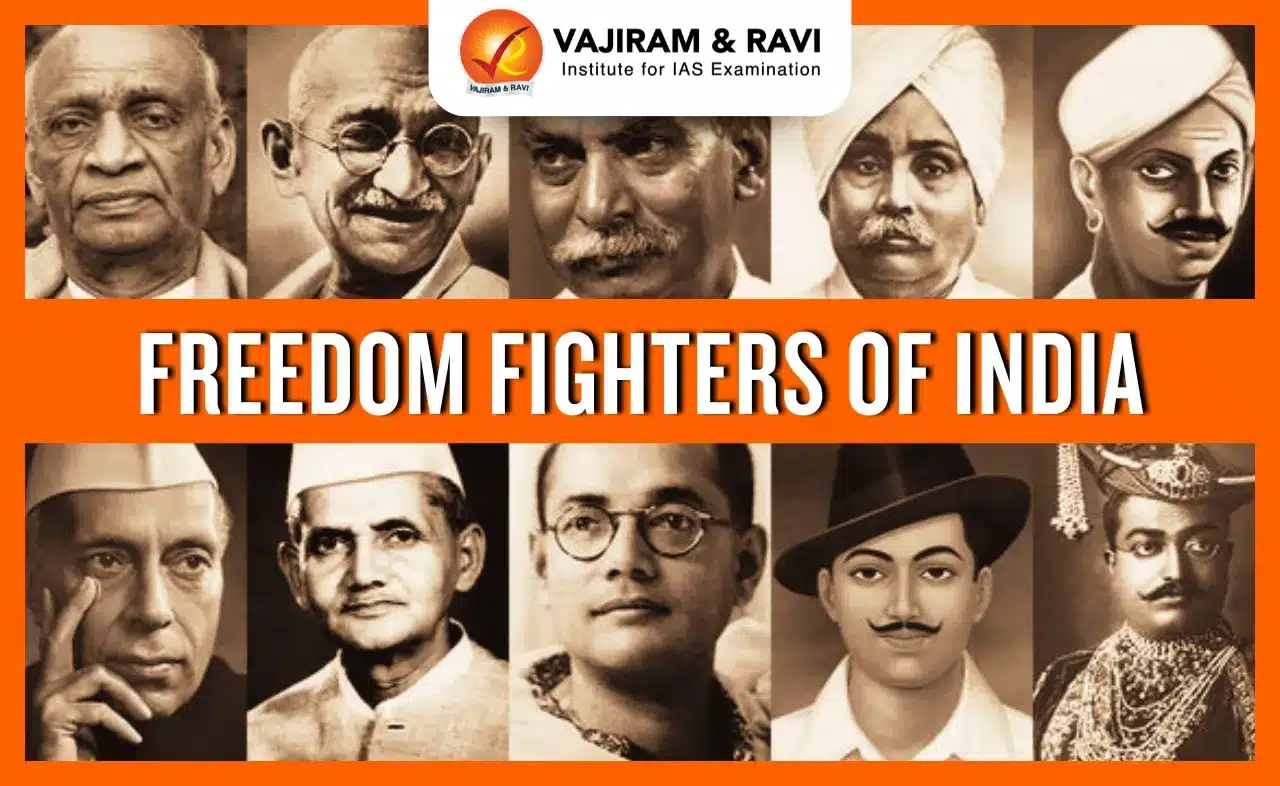
The Freedom of India was the result of the sacrifices of great freedom fighters who played a major role in its independence. Prominent leaders like Bhagat Singh, Mahatma Gandhi, Subhash Chandra Bose, Jawaharlal Nehru, Dr. Rajendra Prasad, Lala Lajpat Rai, Lal Bahadur Shastri, and Bal Gangadhar Tilak united the nation. Alongside them, countless patriots also contributed to India’s struggle against British rule. All the important freedom fighters' names have been shared below in the article.

Freedom Fighters of India

India became an independent and a democratic state on 15th August 1947, marking the freedom struggle by the Freedom Fighters of India who led the great revolutions. The 78th Independence Day will be celebrated on 15th August 2024 across the nation.

Freedom Fighters of India fought various struggles, movements, battles, and uprisings, with many of them sacrificing their lives for the nation's sovereignty. Keep reading the article to know about the Freedom Fighters of India from 1857 to 1947 and their Contributions. 

List of Freedom Fighters of India from 1857 to 1947

India’s struggle for independence was shaped by legendary leaders like Mahatma Gandhi, Bhagat Singh, Subhas Chandra Bose, Jawaharlal Nehru, and Chandra Shekhar Azad, among others. Each freedom fighter played an important role in the Freedom Fight of India. Check out the List of Freedom Fighters of India from 1857 to 1947 below in the table:

List of Freedom Fighters of India from 1857 to 1947
Freedom Fighters Name Contributions and Roles

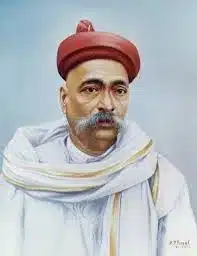
Bal Gangadhar Tilak

The Maker of Modern India, Swadeshi Movement

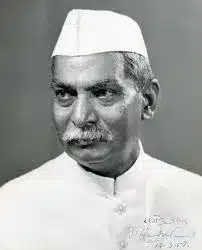
Dr.Rajendra Prasad

First President of the Republic of India

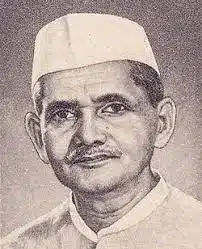
Lal Bahadur Shastri

White Revolution

Green Revolution

Second Prime Minister of India

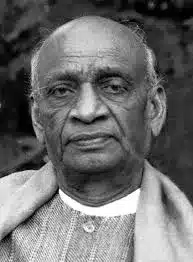
Sardar Vallabhbhai Bhai Patel 

Civil Disobedience Movement and Quit India Movement

Unification of India

Bhagat Singh

One of the Most Influential Revolutionary

Subhas Chandra Bose

World War II

Indian National Congress

Mahatma Gandhi

Father of the Nation,

Civil Rights Activists in South Africa,

Satyagraha,

Civil Disobedience Movement

Quit India Movement

Jawaharlal Nehru

First Prime Minister of India

Gopal Krishna Gokhale

Political guru of Mahatma Gandhi

Chandra Shekhar Azad

Reorganized the Hindustan Republican Association (HRA) under 

 the new name of the Hindustan Socialist Republican Association(HSRA)

Dadabhai Naoroji

Unofficial Ambassador of India

Tantia Tope

Indian Rebellion of 1857

Bipin Chandra Pal

Father of Revolutionary Thoughts

Swadeshi Movement

Lala Lajpat Rai

Punjab Kesari

Against Simon Commission

Ashfaqullah Khan

Member of Hindustan Republican Association

Nana Sahib

Indian Rebellion of 1857

Sukhdev

Chief of Punjab unit of HSRA(Hindustan Socialist Republican Association)

Kunwar Singh

Indian Rebellion of 1857

Mangal Pandey

Sepoy mutiny of the Revolt of 1857

Vinayak Damodar Savarkar

Leading figures of Hindu Mahasabha and formulators of Hindu Nationalist Philosophy

Rani Lakshmi Bai

Leading women in the rebellion of 1857

Begum Hazrat Mahal

First female freedom fighter

Kasturba Gandhi

Quit India movement

Kamla Nehru

Non-cooperation Movement,

Protested against foreign liquors

Vijay Laxmi Pandit

First Indian women ambassador at UN.

Sarojini Naidu

First  Indian woman who acted as governor (UP)

Aruna Asaf Ali

Inquilab (Monthly journal)

Madam Bhikaji Cama

First  Indian to hoist the Indian Non-cooperation flag on foreign soil,

Mother India’s first cultural representative of USA’

Kamla Chattopadhyay

The first woman to be elected to a legislative seat in India(madras province)

Sucheta Kriplani

First women Chief minister (UP)

Annie Besant

First woman president of INC, Home rule league.

Kittur Chennamma

First female ruler to rebel against the British

Savitribai Phule

First lady teacher in India

Usha Mehta

Organized Congress Radio popularly the Secret Congress Radio

Lakshmi Sahgal

India Democratic Women Association(IDWA)(1981 )

Dr. B.R Ambedkar

He is known as the father of the Constitution

He was the First Law Minister of India

Rani Gaidinliu

She was Naga spiritual and political leader

Prafulla Chaki

Involved in the Muzaffarpur killing

Chittaranjan Das

Leader in the Non-cooperation Movement from Bengal and Founder of the Swaraj party

Bhavabhushan Mitra

Involved in Ghadar Mutiny

Alluri Sitarama Raju

Rampa Rebellion 1922-1924

Kanneganti Hanumanthu

Palnadu Rebellion

Parbati Giri

She is also known as mother Teresa of Western Orissa.

Tirupur Kumaran

He was the founder of the DesaBandhu Youth Association

Kanaiyalal Maneklal Munshi

He was the founder of Bharatiya Vidya Bhavan

Senapati Bapat

He was the leader of the Mulshi Satyagraha

Basawon Singh (Sinha)

Lahore Conspiracy Case

Kartar Singh Sarabha

Lahore conspiracy

Bagha Jatin

The Howrah-Shibpur conspiracy case

Jogesh Chandra Chatterjee

Kakori Conspiracy

Roshan Singh

Kakori conspiracy

Pingali Venkayya

He was the designer of the flag on which our National Flag is based

Veerapandiya Kattabomman

He was an 18th-century Tamil chieftain.

He refused to accept the sovereignty of the British East India Company and raised war against them.

He was captured by the British and was hanged to death on 16 October 1799

Sachindra Bakshi

Kakori conspiracy

Rajendra Lahiri

Kakori conspiracy

Manmath Nath Gupta

Kakori conspiracy

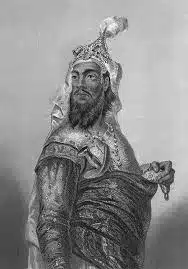
Bahadur Shah Zafar

Indian Rebellion of 1857

Chetram Jatav

Indian Rebellion of 1857

Bakht Khan

Indian Rebellion of 1857

Famous Freedom fighters of India

Here’s a brief overview of some of the Famous Freedom fighters of India and their contributions to the struggle for independence:

Mahatma Gandhi

Mahatma Gandhi

Mahatma Gandhi, born on 2nd October 1869 in Porbandar, Gujarat, is honored as the Father of the Nation. His birthday is celebrated as Gandhi Jayanti in India and recognized globally as the International Day of Non-Violence by the UNO. He was the son of Karamchand Gandhi and Putlibai, was mentored by Gopal Krishna Gokhale. His notable publications include Indian Opinion, Harijan, and Young India. Known as ‘Bapu’ and ‘Gandhiji’, his principles of non-violence and truth shaped India's freedom struggle.

Bal Gangadhar Tilak

Bal Gangadhar Tilak

Bal Gangadhar Tilak was known as Lokmanya Tilak, he was a teacher, nationalist, and activist, and part of the Lal-Bal-Pal trio. As the first leader of the independence movement, he was titled “The Maker of Modern India” by Mahatma Gandhi. His famous slogan, "Swaraj is my birthright, and I shall have it!", became a rallying cry for freedom.

Dr. Rajendra Prasad

Dr. Rajendra Prasad

India’s first President (1950-1962), Dr. Rajendra Prasad was a lawyer, politician, and activist. A close associate of Mahatma Gandhi, he was jailed during the Satyagraha (1931) and Quit India Movement (1942). He also served as India’s Food and Agriculture Minister. Revered as “Ajata Shatru” (one with no enemies), he played a key role in shaping the nation.

Lal Bahadur Shastri

Lal Bahadur Shastri

India’s 2nd Prime Minister and 6th Home Minister, Lal Bahadur Shastri is known for leading the White Revolution, increasing the milk production, and initiating the Green Revolution to enhance food security. He was known for his simplicity and dedication to the nation.

Sardar Vallabhbhai Bhai Patel

Sardar Vallabhbhai Bhai Patel

Sardar Vallabhbhai Patel (1875–1950), known as the "Iron Man of India", was India's first Deputy Prime Minister and Home Minister. A lawyer and statesman, he played a key role in integrating 562 princely states into India. His leadership in uniting the nation earned him the title "Unifier of India".

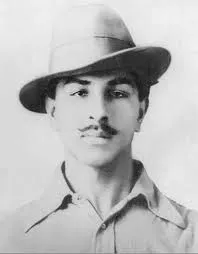
Bhagat Singh

Bhagat Singh

Bhagat Singh (1907-1931) became a national icon through his bravery and sacrifice. He sentenced to death of Lala Lajpat Rai by mistakenly killing a British officer and later threw bombs in the Central Legislative Assembly as a protest. His hunger strike in jail and martyrdom at 23 made him a legendary figure in India's independence movement.

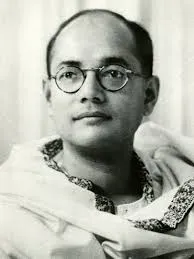
Subhas Chandra Bose

Subhas Chandra Bose

Famously called "Netaji", Subhas Chandra Bose (1897-1945) was a nationalist known for his militant approach toward independence. He founded Azad Hind Fauj (Indian National Army) and inspired millions with slogans like "Tum Mujhe Khoon Do, Main Tumhe Aazadi Dunga" and "Delhi Chalo". His socialist policies and strategic alliances aimed at ending British rule.

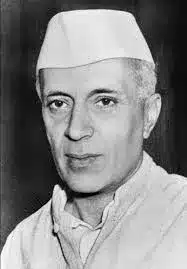
Jawaharlal Nehru

Jawaharlal Nehru

India’s first Prime Minister, Pt. Jawaharlal Nehru (1889-1964) played a key role in shaping modern India. Educated at Cambridge and London, he returned to India in 1912 and joined the freedom struggle. His love for children earned him the title "Chacha Nehru", and his birth anniversary (14th November) is celebrated as Children’s Day in India.

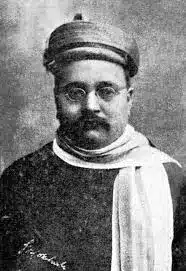
Gopal Krishna Gokhale

Gopal Krishna Gokhale

A moderate nationalist and social reformer, Gopal Krishna Gokhale (1866-1915) was instrumental in promoting education, economic reforms, and self-rule. He mentored Mahatma Gandhi, shaping his early political views. His dedication to social justice and gradualist approach made him a respected leader in India's fight for freedom.

Chandra Shekhar Azad

Chandra Shekhar Azad

Chandra Shekhar Azad reorganized the Hindustan Republican Association (HRA) after Ramprasad Bismil's death. At 15, he was arrested for joining Gandhi’s Non-Cooperation Movement, famously declaring “Azad” (free) as his name.

Dadabhai Naoroji

Known as the "Grand Old Man of India," Dadabhai Naoroji was a founding member of the Indian National Congress (INC) and introduced the Drain of Wealth theory in his book Poverty and Un-British Rule in India.

Tantia Tope

Tantia Tope

A commander in the 1857 Revolt, Tantia Tope fought the British alongside Rani Lakshmibai and Nana Saheb. Though lacking formal military training, he became one of India's most skilled rebel leaders.

Bipin Chandra Pal

Bipin Chandra Pal

A member of the Lal-Bal-Pal trio, Bipin Chandra Pal was known as the "Father of Revolutionary Thoughts" and advocated Swaraj (self-rule). His works include Indian Nationalism and The Soul of India.

Lala Lajpat Rai

Lala Lajpat Rai

Nicknamed “Punjab Kesari” (Lion of Punjab), Lala Lajpat Rai was a social reformer and nationalist. He led the Simon Commission protest and surrender to injuries from police brutality.

Ashfaqullah Khan

Ashfaqullah Khan

A revolutionary involved in the Kakori Train Robbery (1925), Ashfaqullah Khan was sentenced to death for challenging British rule alongside Ram Prasad Bismil.

Nana Saheb Peshwa II

Nana Saheb Peshwa II

A leader of the 1857 Revolt, Nana Saheb fought against British injustice after being denied the pension of his adoptive father, Peshwa Baji Rao II.

Sukhdev Thapar

Sukhdev Thapar

Born on 15 May 1907 in Ludhiana, Punjab, Sukhdev Thapar was a senior member of the Hindustan Socialist Republican Association (HSRA). He played a crucial role in India's freedom struggle alongside Bhagat Singh and Rajguru. At just 23 years old, he was hanged on 23 March 1931 by the British.

Kunwar Singh

Kunwar Singh

Also known as Veer Kunwar Singh, he was a chief organizer of the 1857 Revolt in Bihar. He belonged to the Ujjainiya clan in Bhojpur, Bihar, and fought bravely against British forces despite being in his 80s.

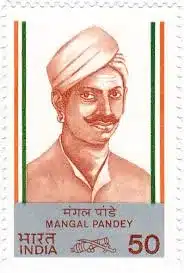
Mangal Pandey

Mangal Pandey

A soldier in the 34th Bengal Native Infantry, Mangal Pandey played a pivotal role in sparking the 1857 Revolt. His attack on British officers is considered the first major incident of the Sepoy Mutiny. In 1984, the Indian government issued a postage stamp in his honor.

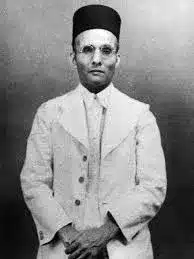
Vinayak Damodar Savarkar

Vinayak Damodar Savarkar

A revolutionary, writer, and activist, Vinayak Damodar Savarkar was a leading face of the Hindu Mahasabha. His book, The War of Independence, was banned by the British for promoting nationalist sentiments. Despite being an atheist, he advocated Hindu philosophy as a pragmatic nationalist.

Freedom Fighters of India FAQs

Q1: Who is the legend of the freedom fighter?

Ans: Mahatma Gandhi

Q2: Who is the freedom fighter queen?

Ans: Rani Lakshmibai, the Queen of Jhansi, stands as a prominent figure among female Indian freedom fighters.

Q3: Who is the brave woman in India?

Ans: Prominent brave women in India’s freedom struggle include Rani Lakshmibai, Rani Abbakka, Kittur Chennamma, Aruna Asaf Ali, and Sarojini Naidu.

Q4: Who is the best female fighter in India?

Ans: Rani Lakshmibai is often regarded as one of the bravest and most iconic women in India’s freedom struggle.

Bab al-Mandab strait

Bab al-Mandab strait

About Bab al-Mandab strait

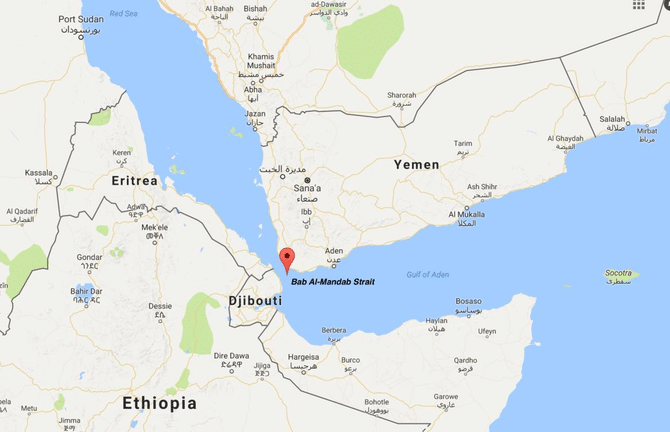
  • It is strait between Arabia (northeast) and Africa (southwest) that connects the Red Sea (northwest) with the Gulf of Aden and the Indian Ocean (southeast).
  • It forms a vital strategic link in the maritime trade route between the Mediterranean Sea and the Indian Ocean via the Red Sea and the Suez Canal
  • It is one of the world's most important routes for global seaborne commodity shipments, particularly crude oil and fuel.
  • It is bordered by Yemen on the Arabian Peninsula and Djibouti and Eritrea on the African coast.

Key points about the Red Sea

  • It is a semi-enclosed inlet (or extension) of the Indian Ocean between the continents of Africa and Asia. It is one of the world’s warmest seas.
  • The northern portion of the Red Sea is bifurcated by the Sinai Peninsula into the Gulf of Aqaba and the Gulf of Suez, where it is connected to the Mediterranean Sea via the famous Suez Canal.
  • Bordering Countries:
    • Yemen and Saudi Arabia border the Red Sea to the east.
    • It is bordered by Egypt to the north and west and by Sudan, Eritrea, and Djibouti to the west.

Q1) Where is Sinai Peninsula?

It is a triangle-shaped peninsula located in northeastern Egypt. It serves as a land bridge connecting Asia and Africa.It has an area about 23,500 square miles (61,000 square km). It is the sovereign territory of Egypt.

Source: Bab al-Mandab shipping lane a target as Israel fights Hamas

How are Rajya Sabha Members Elected?

How are Rajya Sabha Members Elected?

About Rajya Sabha:

  • Origin: India follows the British parliamentary system, so the Rajya Sabha, or the Upper House of Parliament, is equivalent to the House of Lords in the United Kingdom.
  • Present strength:  The Rajya Sabha currently has 245 members, including 233 elected members and 12 nominated. As per the constitutional limit, the Upper House strength cannot exceed 250.
  • Membership: While 233 members are elected from states and Union Territories (UTs), President of India nominates the remaining 12 from from the fields of art, literature, science and social services. 
  • Tenure: Every Rajya Sabha MP has a tenure of six years and elections to one-third seats are held every two years.
  • Vacancy: According to Section 154 of the Representation of the People Act 1951, a member chosen to fill a casual vacancy will serve for the remainder of his predecessor's term of office.
  • Chair: The Indian vice-president is chairperson of the Upper House, while it also has a deputy chair.

Election Process to Rajyasabha

  • While Lok Sabha members are elected directly by the voters, Rajya Sabha members are elected indirectly by the people, that is, by the elected Members of a state's Legislative Assembly (MLAs).
  • How many Rajya Sabha members a state can send depends on its population.
  • MLAs vote in the Rajya Sabha elections in what is called proportional representation with the single transferable vote (STV) system. Each MLA’s vote is counted only once.
  • In this system, MLAs don’t vote for each seat.
  • Instead, the MLAs are given a paper with the names of all candidates. They have to give their order of preference for each candidate, marking 1,2,3… against their names.
  • The ballot is open but MLAs have to show their ballots to an authorised agent from their party to prevent practices such as cross-voting. A vote cannot be counted if the ballot is not shown to the agent. Independent MLAs cannot show their ballot to anyone.
  • If a qualifying number of voters choose a candidate as their first choice, he or she is elected. 
  • The remaining votes go to the next candidates, but with a lesser value. So, MLAs also vote for candidates from other parties. 
  • The candidate that gets rank 1 from an MLA secures a first preference vote. In order to win, a candidate needs a specific number of such first preference votes. This number depends on the strength of the state Assembly and the number of MPs it sends to Rajya Sabha.
  • To win, a candidate should get a required number of votes which is known as quota or preference vote. The formula is = [Total number of votes/(Number of Rajya Sabha seats + 1)] + 1.
  • However, the formula is changed in case more than one seat needs to be filled. The total number of votes required for a candidate in the case is = [(Number of votes x 100) / (Vacancies + 1)] + 1.

Q1)

The Rajya Sabha should consist of not more than 250 members - 238 members representing the States and Union Territories, and 12 members nominated by the President.The Rajya Sabha currently has 245 members, including 233 elected members and 12 nominated

Source: Election for 10 Rajya Sabha seats on July 24: S Jaishankar, Derek O'Brien in fray

Enquire Now